
How often should you wash your car in Miami? More often than the national advice says, and for different reasons. The generic answer, every two weeks, was written for places where the weather takes the winter off.
For most Miami drivers, wash the car every one to two weeks. Make it weekly if you park outside, live near Biscayne Bay or drive a dark car, and wash within a day of anything that lands on the paint: lovebugs, bird droppings, sap or salt spray. That is the whole answer. The rest of this guide explains why, and how to tell which side of that range you are on.
We keep a fleet of exotic rental cars showroom-ready in the same building as our studio, so this is the schedule we actually live by, not a number pulled from a survey.
The short answer
Frequency depends on two things more than anything else: where the car sleeps and what it drives through. Here is how that plays out in Miami.
| Your situation | Wash every | Why |
|---|---|---|
| Garage parking, short city drives | 2 weeks | Out of the sun and rain, but building dust still settles |
| Street or open-lot parking | 1 week | Sun, rain spots, droppings and pollen land every day |
| Near the bay or the beach | 1 week | Salt mist settles on the paint, glass and wheels |
| Black, dark or exotic paint | 1 week | Dark paint shows every spot, and soft clear coats mark easily |
| Lovebug season, highway driving | Within a day | Their remains damage paint the longer they stay |
| After a storm | Within a few days | Rain spots bake in under the sun |
If two rows apply, follow the shorter interval. A dark car parked on the street near the bay is a weekly car, full stop.
Why Miami is harder on paint than the national advice assumes
Most car care advice is written with snow and road salt in mind. Miami has neither, so it is easy to assume a car here gets off lightly. It does not. It just gets attacked by different things, all year.
Sun. Strong sun is the background to everything. It heats dark panels until anything on them dries fast and bonds harder, and it slowly breaks down unprotected clear coat. Droppings and bug remains that would wipe off in a cooler climate set in a single afternoon here.
Humidity. The air rarely dries out. Dust and pollen stick to a damp surface instead of blowing off, and a car can collect a film overnight even in a garage.
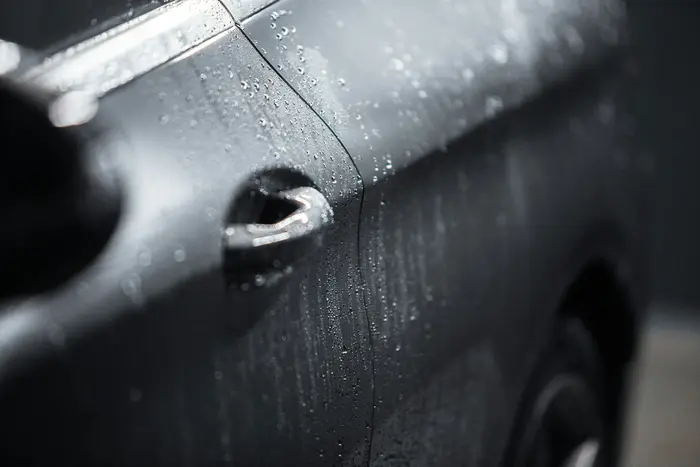
Rain that does not rinse. We get a lot of it, in short heavy bursts, and then the sun comes straight back out. More on that below, because it is the most common misunderstanding we hear.
Construction and traffic. Downtown and the neighborhoods around it are full of active building sites. Fine dust and grit from that work settle on every car nearby, and grit is exactly what causes swirl marks when it gets wiped around.
None of this is dramatic on any single day. It is the accumulation that matters, which is why a regular schedule beats an occasional deep clean.
Rain is not a wash
"It rained, so the car is clean" is the most expensive myth in South Florida car care. Rain falls through dust and pollutants on the way down, lands on the dirt already on your paint, and then evaporates. What it leaves behind is everything it carried, concentrated into spots.
Miami gets most of its rain in one stretch. The National Weather Service in Miami puts the median start of the summer rainy season at May 21 and the end at October 17, with about 69% of the year's rain at Miami International Airport falling in that window. Through those months, afternoon storms followed by full sun are the normal pattern, and that cycle is exactly what etches water spots into paint and glass.
The practical rule: in rainy season, do not stretch the schedule because it rained. If anything, wash a little sooner after a storm, before the sun bakes the spots in.
Lovebug season: wash within a day
Twice a year, highways in Florida fill with lovebugs. According to University of Florida IFAS entomologists, the large flights happen in May and September and each lasts about four weeks. They are drawn to exhaust fumes, engine heat and vibration, which is why the front of a car takes the hit.
The same researchers recommend washing cars within one day to reduce paint damage. That matches what we see: fresh remains come off with a normal hand wash, while remains that have sat in the sun for a few days can leave marks that need polishing.
- Wash the front end, mirrors and glass within a day of highway driving in May and September.
- Never scrub dried bugs off a dry panel. Soak them first so they release instead of scratching.
- A protected surface, such as a ceramic coating, lets remains release far more easily.
Salt air near the bay
If you live or park near Biscayne Bay or the beach, the air carries a fine salt mist you cannot see. It settles on paint, glass, chrome and wheels, and it holds moisture against whatever it lands on. On exposed metal, trim and brake parts, that speeds up corrosion. On paint and glass, it leaves a dull film that rain does not lift.
This is the main reason we put waterfront parking in the weekly row. Salt is easy to remove when it is fresh and a nuisance once it has been through a few heat and humidity cycles. Wheels and the lower body deserve attention every time, because that is where road spray and salt collect.
If you park in a building garage
A covered garage is the best thing you can do for paint in Miami. It takes the sun, the rain and most of the droppings out of the equation, and it is why the garage row in the table can stretch to two weeks.
It is not a sealed box, though. Garages collect dust, especially in buildings near construction, and that dust settles evenly over the whole car. The risk is not the dust itself. It is wiping it off dry with a cloth or your sleeve, which drags grit across the clear coat. If the car looks dusty, wash it, do not wipe it.
What every wash should include
Frequency only helps if each wash is a good one. A fast wash that adds scratches every week does more harm than a careful wash every two weeks.
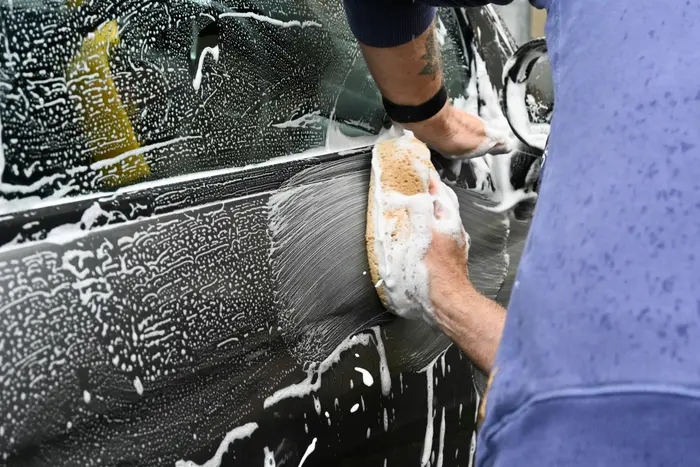
Our view: every wash should include iron decontamination, not just soap and a rinse. Tiny metal particles from brakes and road traffic bond to paint, and a normal wash leaves them there. A fallout remover dissolves them. That is why our interior + exterior quick wash includes it, along with a hand wash, wheels and tires, and a quick interior vacuum. It costs $49.99 for a sedan and takes about 15 to 20 minutes. Exterior only starts at $29.99. Every price is on our price list, side by side for sedan, SUV and exotic.
The other half of the opinion: avoid spinning brushes on paint you care about. Brushes in a tunnel wash carry grit from the car before yours, and they drag it across your clear coat. A hand wash with clean mitts and plenty of soap lifts dirt off instead. If years of the other kind of wash have already left swirls, paint correction is what takes them out.
Between washes
A few habits stretch the time a car stays clean and keep small problems from becoming paint problems.
- Deal with droppings the same day. They are acidic and the sun makes them worse fast. Soak, then lift, never scrub.
- Park in shade when you can. It slows everything down: drying, baking and fading.
- Keep food and drinks out of the cabin. In Miami heat, a forgotten coffee becomes a smell problem within a day.
- Do not wipe a dusty car dry. If it needs cleaning, it needs washing.
- Rinse after a beach day. Sand and salt are easiest to remove before they dry on.
Is a membership worth it?
If the schedule above puts you in the weekly or every-other-week rows, you are washing two to four times a month. At that point the maths starts to favor a membership: two quick washes a month already come to $99.98 for a sedan.
We are setting up a monthly plan now so you can stop in whenever the car needs it, even on the way to dinner, without thinking about the bill each time. Join the waitlist and you hear first, with the price and terms in writing.
Until then, the studio is at 500 W Flagler St, minutes from Brickell and Downtown, open 10 AM – 7 PM. Walk in, wait in the showroom, and drive out with a car that is clean for the right reasons. Directions and parking are on our visit page.